
Several years ago, I read a newspaper article on how much the food stamp program, SNAP, was helping people unemployed or underemployed by the COVID-19 pandemic. I am glad there was some help for them. I am glad there were enough government employees to get debit cards to them within a week. I have a concern, though.
The article quoted a young single mother with a 5-year-old son. She was extremely grateful to get the card especially since it was taking so long to get unemployment benefits. I was surprised when she said that she received the maximum amount for 2 people and it wasn’t enough to feed her and her son. It was about 1/3 less than she usually spent on groceries and so she had to eat less and even skip breakfast. The amount she received each month was $355 for the 2 of them. That was more than I was spending, on average, for 2 adults plus regularly visiting family, and we have a healthy balanced diet.
My concern is that people don’t seem to know, or are not taught, how to make their dollar go further and still eat well and eat healthy meals. It’s possible. I’ve been doing it for 50 years. The example above is not an isolated case. I have a daughter who was temporarily on food stamps in college and saw how other students couldn’t make their food stamps last all month. It came down to shopping habits, eating habits, and self-discipline.
One of the skills of self-reliance is frugality. Provident living (or being self-reliant) is being “wise, frugal, prudent, making provision for the future while attending to immediate needs.” Bishop J. Richard Clarke taught “Frugality is a principle of righteousness…Economic freedom comes from the surpluses we create.” To be frugal is to avoid unnecessary monetary expenditure; to be thrifty; not wasteful. Elder Bruce R. McConkie stated “Industry, thrift, and self-respect are essential to salvation.”
Proverbs 21: 20 says “There is treasure to be desired and oil in the dwelling of the wise; but a foolish man spendeth it up.”
D&C 49:21 teaches “And wo be unto man that….wasteth flesh and hath no need.”
Here are a few ways to be frugal and save on groceries so you can buy more food with the money you have:
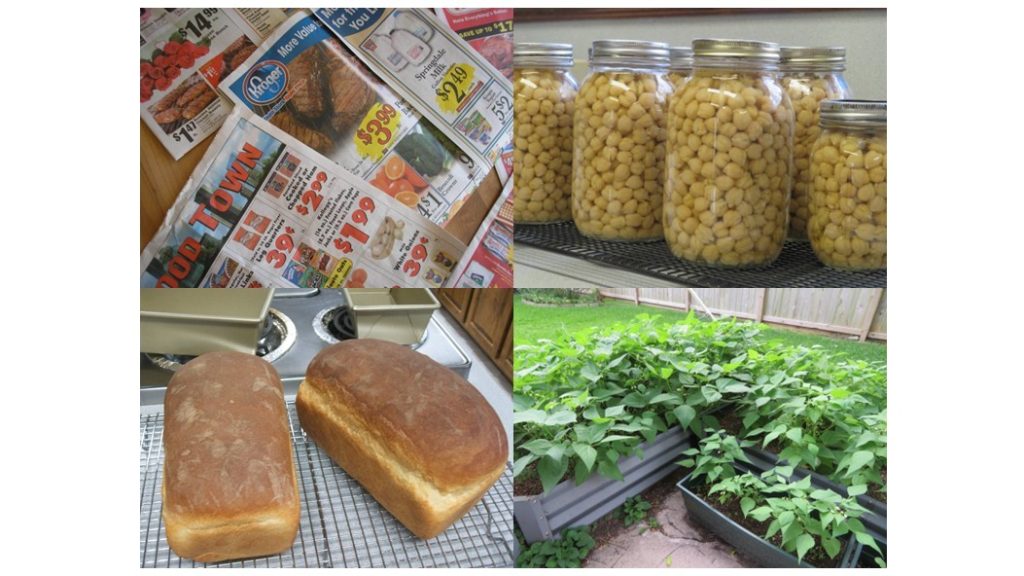
- Shop sales and stock up.
- Compare prices.
- Figure cost per serving.
- Buy less meat and buy it when it’s $3/pound or less.
- Use meat as a seasoning instead of eating it as the main entrée. A pound of meat can be stretched to feed 6 to 8 people in a casserole, stew, or soup.
- Use eggs as a protein source.
- Buy produce in season and aim for $1/pound or less.
- Rely more on the consistently less expensive fruits and vegetables – bananas, potatoes, carrots, cabbage, onions.
- Eat more beans. Cook dried beans and freeze in recipe size portions or pressure can them.
- Buy less soda and chips.
- Make your own desserts and make fewer desserts.
- Make your own bread.
- Buy house brands instead of national brands.
- Buy canned fruits and vegetables especially when fresh is out of season. (Out of season does not equate with not in the stores.)
- Cook from scratch and avoid convenience foods.
- Avoid single serving packaging.
- Serve hot cereal instead of cold cereal.
- Plan for leftovers.
- Grow a garden. Even a small one helps.
I invite you to find ways to make frugality one of your self-reliance skills.